Pressure Tank Service in Wichita
Pressure tank service in Wichita, KS: fixing rapid cycling, waterlogged tanks, and pressure swings that wear out your well pump early.
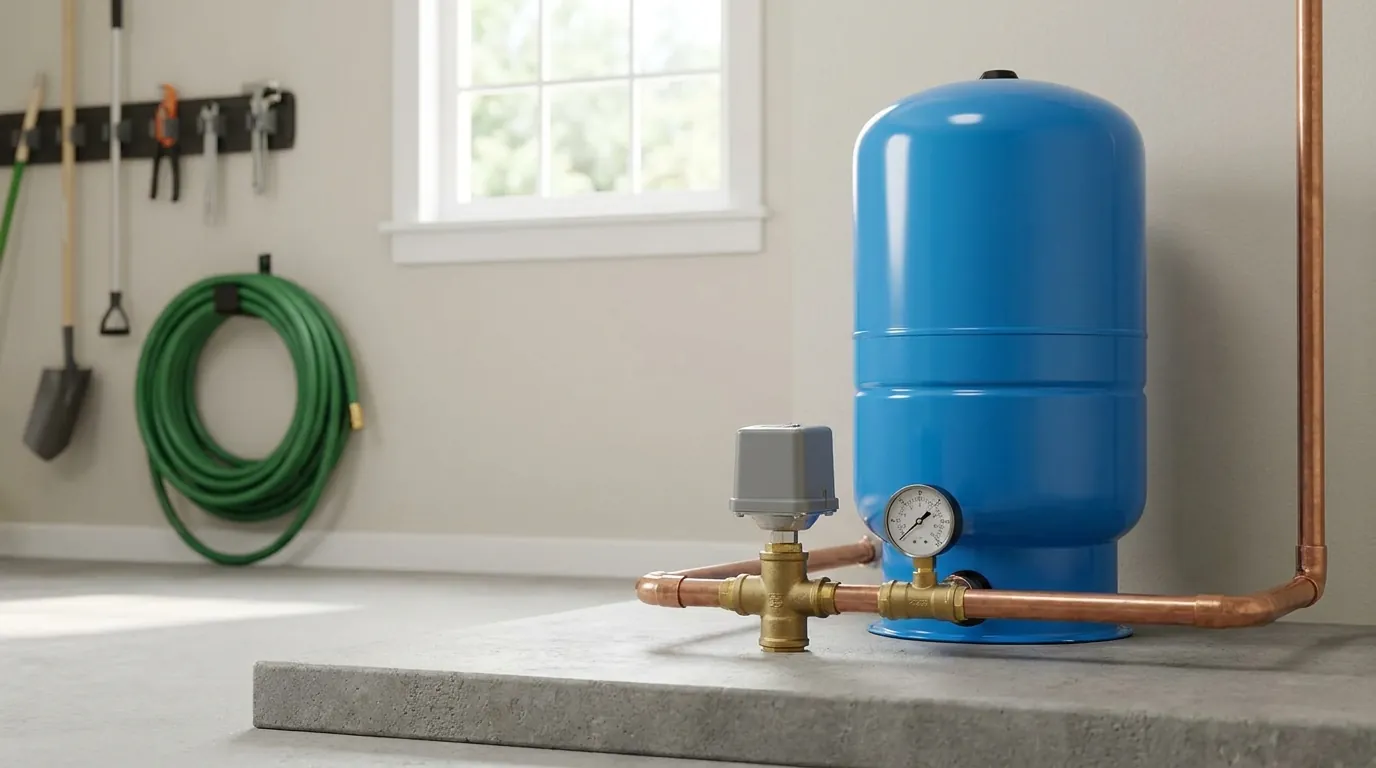
What the pressure tank does — and why it fails
The pressure tank is the quiet workhorse of a well system. It stores pressurized water so the pump doesn't have to run every time you open a tap, and it smooths out the pressure you feel at the fixtures. When the tank's internal air charge is wrong or its bladder has failed, the pump starts kicking on and off far too often — a pattern called rapid cycling that wears the motor down over time.
A lot of calls that sound like pump trouble trace back to the tank instead. If your water pressure swings or the pump short-cycles, it's often cheaper to service the tank than to touch the pump. This page pairs closely with low water pressure diagnosis and with well pump repair, since the tank, switch, and pump all work as one system.
Signs the tank needs attention
Listen for the pump cycling on and off rapidly while you run water — the clearest sign of a waterlogged or failed tank. Other signs include pressure that surges and drops at the tap, water spitting from faucets, a tank that feels completely full and heavy when you tap it, or a pressure gauge that bounces instead of holding steady between the cut-in and cut-out points.
A tank that's rusting at the base or weeping around the fittings is also near the end of its service life. Because a bad tank quietly shortens the life of the pump, it's worth catching early rather than after the pump has taken the strain for months.
How tank service works
Servicing the tank is about restoring the right air-to-water balance and confirming the switch and tank are matched.
-
Check the air charge
With the system depressurized, we measure the tank's pre-charge against the pressure switch's cut-in setting. An air charge that has bled off over time is a common, inexpensive cause of cycling.
-
Test the bladder and switch
We confirm whether the bladder is intact or waterlogged and check that the pressure switch cuts in and out at the right points. A failed bladder means the tank can't hold its air and needs replacement.
-
Recharge or replace
If the bladder is sound, we reset the air charge to match the switch. If it has failed or the tank is corroded, we fit a correctly sized replacement for your pump and household demand.
-
Set and verify pressure
We tune the switch and run the system through several draw-down cycles to confirm pressure holds steady and the pump runs for a healthy length of time rather than short-cycling.
Local conditions and the pressure tank
Wichita's wide temperature swings affect air pressure inside the tank, so a charge that was correct in winter can read low by midsummer, nudging an aging tank toward cycling. Tanks kept in unconditioned garages, pit houses, or outbuildings around the area see this more than those in a climate-controlled space.
Mineral-rich groundwater is common across this region, and sediment can collect in a tank over the years, reducing its working volume and accelerating corrosion. When we replace a tank, we size it to work with your specific pump — a step that matters most during a well pump replacement, since a new pump paired with an old, undersized tank will cycle hard from the start.
Fix the cycling before it costs a pump
If your pump clicks on and off constantly or your pressure jumps around, call to describe it. Tank service is often the least expensive way to protect the whole system.
Serving Wichita and nearby towns including Park City, Valley Center, and Bel Aire.
Frequently asked questions
Why does my pump turn on and off so often?
Rapid cycling almost always points to the pressure tank: either the air charge has bled off or the internal bladder has failed, so the tank can't store pressurized water. The pump then runs every time water moves, which wears it quickly. Servicing or replacing the tank usually solves it.
Can a pressure tank be recharged instead of replaced?
Yes, if the bladder is still intact. A tank that has simply lost air over time can be recharged to match the pressure switch. If the bladder has ruptured or the tank is corroded, a replacement is the right call.
What size pressure tank do I need?
The right size depends on your pump's output and your household's water demand. A tank that's too small forces frequent cycling, so it should be matched to the pump — which is why tank and pump decisions go together.
How does a bad tank affect my well pump?
A waterlogged or undersized tank makes the pump start and stop far more often than it should. That constant cycling heats and wears the motor, shortening the pump's working life. Fixing the tank protects the more expensive component down the well.