Well Inspection in Wichita
Well inspection in Wichita and nearby towns: flow, pressure, pump condition, and water-table factors that affect how your system performs.
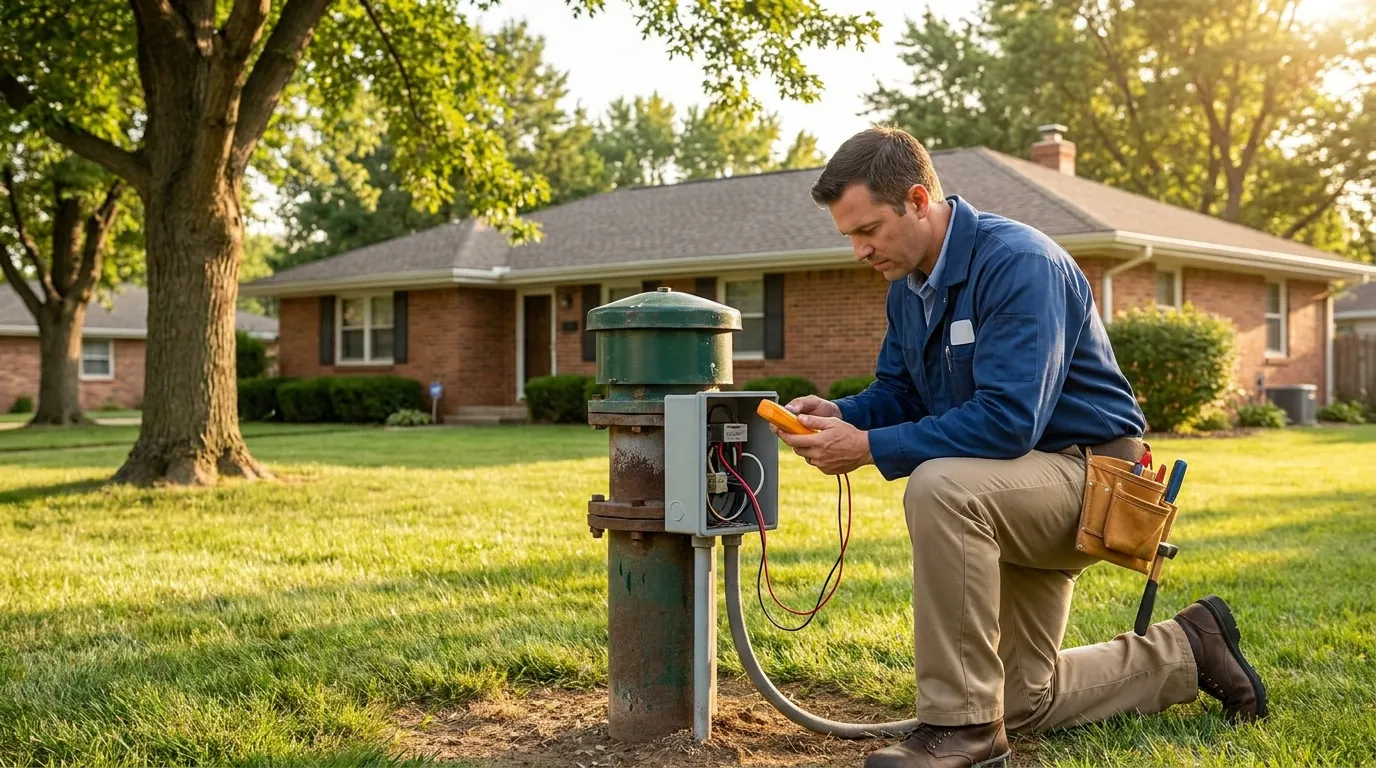
When a well inspection makes sense
A well inspection is a structured check of everything that moves water from the aquifer to your fixtures: the pump, the drop pipe, the wiring, the pressure tank, the pressure switch, and the water itself. Homeowners around Wichita usually ask for one at three moments — buying or selling a property, noticing a change in how the water behaves, or simply wanting a baseline on a system they inherited and know little about.
Private wells in the Wichita area draw from varying depths, and water-table level shifts with the seasons and with heavy pumping nearby. Because so much of the equipment sits underground or inside a buried pitless adapter, problems rarely announce themselves until pressure drops or the pump cycles oddly. An inspection surfaces the condition of parts you can't see, so you can plan rather than react.
This page explains what a thorough inspection covers in our climate and soils. If an inspection turns up a worn or failing pump, it connects naturally to well pump repair or, where the unit is at the end of its service range, well pump replacement.
What a Wichita well inspection covers
Each check targets a specific failure mode we see in this region's wells.
-
Flow and recovery
We measure how much water the well delivers and how quickly it recovers after drawdown. In dry spells or during heavy nearby irrigation, a shallower well can struggle to keep up, and that shows in the numbers.
-
Pump performance
Amp draw, run time, and cycling patterns tell us whether the pump is working harder than it should. A motor pulling high amps or short-cycling is often the early stage of a problem.
-
Pressure tank and switch
We check tank air charge, bladder condition, and switch calibration. A waterlogged tank makes the pump cycle constantly, which wears the motor — more on this under [pressure tank service](/services/pressure-tank-service/).
-
Wiring and controls
Wide temperature swings and spring storms stress wiring, pressure switches, and control boxes. Corroded connections and tripped protections get flagged before they strand you without water.
-
Water quality basics
Clay-heavy soils and local mineral content affect what comes up the pipe. We note sediment, cloudiness, odor, and staining that point to screen wear, iron, or hardness issues.
-
Wellhead and seal
The cap, casing, and pitless adapter are checked for cracks and poor sealing — gaps that let surface water or insects reach the water column, especially after storm runoff.
How local soil and water change the inspection
Well depth, water-table level, and mineral content vary noticeably between neighborhoods and the towns around Wichita, and all three change how an inspection reads. A well that measured strong in a wet spring can test lower in a dry August, so a single reading is only part of the picture — the trend and recovery rate matter more.
Clay-heavy soils hold moisture and shift with wet-dry cycles, which can stress buried pipe and the pitless adapter over time. Mineral content also leaves its mark: iron and hardness build up on screens and inside pressure tanks, gradually choking flow. When we inspect, we weigh what we see against the depth and water conditions typical for your specific location rather than a one-size-fits-all checklist.
If the inspection shows the pump is weakening, the next decision is whether to repair the existing unit or plan a replacement. Pressure problems that trace to the tank or switch instead often point toward low water pressure diagnosis as the better starting point.
Get a clear read on your well
Schedule a well inspection in Wichita or a nearby town and receive a plain-language summary of what's working, what's wearing, and what to watch.
Call to arrange a visit — we serve Wichita, Bel Aire, Park City, Maize, Valley Center, Derby, and Andover.
Frequently asked questions
How long does a well inspection take?
Most residential inspections take one to two hours, depending on access to the wellhead and whether flow and recovery tests are needed. Older systems with hard-to-reach equipment can take longer. We walk you through the findings before leaving.
Can you inspect a well before I buy the house?
Yes. A pre-purchase inspection is one of the most common reasons people call us, because the pump and tank are hidden from a normal home walkthrough. We report flow, pump condition, tank health, and water-quality basics so you can negotiate or plan with real information.
Will the inspection tell me if I need a new pump?
It identifies whether the pump is performing within a normal range, running hot, or struggling to recover. From there we explain whether repair or replacement is the more sensible path, but the choice stays yours.
Do you handle well drilling as part of an inspection?
Our focus is pump and system service rather than drilling new wells. If an inspection shows the well itself is the limiting factor, we'll explain what we found so you can talk with a drilling contractor about your options.