Well Pump Replacement in Wichita
Well pump replacement in Wichita, KS: when to replace, how a pump is sized to your well, and what the job involves from pull to startup.
When replacement makes more sense than repair
A pump that has burned out its motor, lost its windings, or worn its impellers past the point of holding pressure is usually a replacement rather than a repair. So is an aging pump that keeps failing in new ways every season — at some point the repair bills outrun the cost of a new unit. The goal is to match the replacement pump to the actual well, not to whatever happened to be installed last time.
If you're not yet sure the pump is the problem, start with well pump repair, where diagnosis rules out cheaper causes like the pressure switch or tank. A full well inspection is also worth it before replacement, since it measures the well's depth and water level — the numbers that determine how a new pump should be sized and set.
What a replacement involves
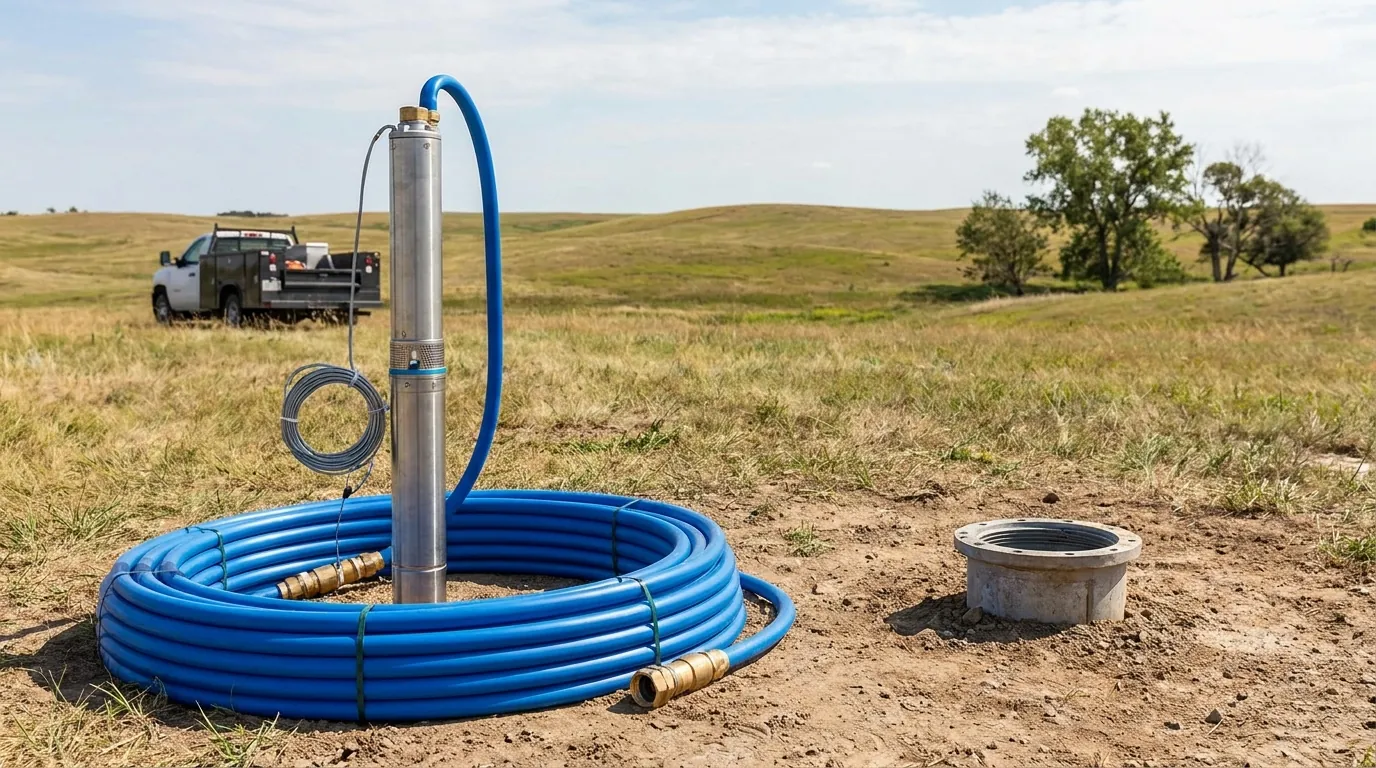
Replacing a submersible pump means pulling everything out of the casing, so it's the right time to renew the parts that wear alongside the pump.
-
Measure the well and water level
Before ordering anything, we confirm the well's depth, the static water level, and the home's fixture count. A pump sized to those numbers delivers steady pressure without running itself ragged or pulling air.
-
Pull the old pump and drop pipe
The pump, drop pipe, wiring, and safety rope come up out of the casing together. This is also the moment to inspect the casing and check valve, which you can't see any other time.
-
Install the new pump and renew worn parts
We set the new pump at the correct depth and typically replace the drop pipe, wiring splice, foot or check valve, and pitless adapter seal as needed rather than reusing tired parts that would fail soon after.
-
Set controls and test
The pressure switch and tank charge are set, the system is run through multiple pressure cycles, and we verify flow and amp draw are where they should be before finishing.
Sizing a pump for Wichita wells
Well depth, water-table level, and mineral content vary across the Wichita area, and all three feed into how a replacement is sized. A deeper well needs a pump that can lift water farther, which means a different horsepower and stage count than a shallow well closer to the river bottom. Guessing high or low both cause problems: an oversized pump cycles hard and wears quickly, while an undersized one may struggle to keep up during peak demand.
Groundwater here often carries minerals that scale impellers and check valves over time, so material choice and a correctly set depth both affect how long the new pump holds up. We also pair the replacement with the right pressure tank service, because a mismatched tank makes even a brand-new pump cycle too often and shortens its working life.
Talk through a replacement
If your pump is on its last legs or has already quit, call and describe your well and symptoms. We'll explain what sizing and parts the job calls for before any work starts.
Serving Wichita, Bel Aire, Park City, Maize, Valley Center, Derby, and Andover.
Frequently asked questions
How long does a well pump last?
It varies with water quality, how often the pump runs, and how well it was sized to the well. Hard or sandy water and frequent cycling shorten that span, while a well-matched pump on clean water tends to hold up longer. An inspection can tell you where yours stands.
What drives the cost of a replacement?
The main factors are well depth, the horsepower the well requires, and which parts need renewing — drop pipe, wiring, and valves often get replaced along with the pump. Deeper wells cost more because there's more pipe and wire to pull and reset.
Can you reuse my old drop pipe and wiring?
Sometimes, but it's often false economy. Since the pipe and wire are already out of the casing during a replacement, renewing worn sections then is far cheaper than pulling the whole string again soon after if they fail.
Do I need a new pressure tank too?
Not always, but it's worth checking. If the existing tank is waterlogged or the wrong size for the new pump, it will cause rapid cycling that wears the pump early. We assess the tank as part of the replacement.